Water, Sanitation & Hygiene Program
May-August 2022
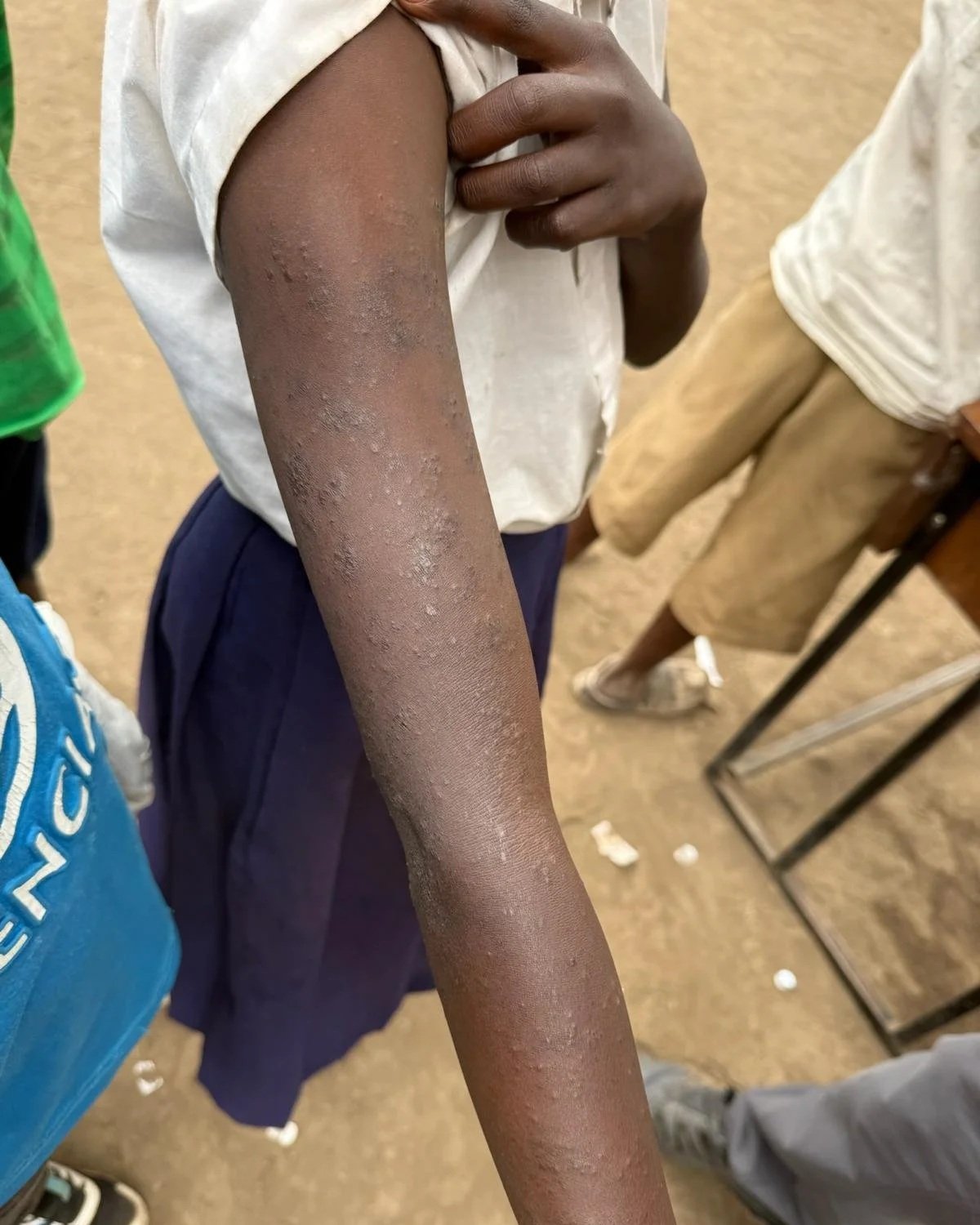
An active scabies infection, one of the primary conditions addressed by the WASH program.
Theory of Change
The WASH Program educates community members about adequate bathroom hygiene and sanitation, including, but not limited to, handwashing, facilities cleaning, and maintenance; as well as the signs, symptoms, and treatment of diarrhea, trachoma, scabies and other sanitation-related diseases. Open defecation is the most common bathroom practice in extreme poverty communities in rural Kilimanjaro. Our long-term goal is to transition these communities to using bathroom facilities starting with children.
Building community and school bathrooms is an ongoing sister project to this program. [INSERT HYPERLINK BEFORE PUBLISHING]
Goals
Empower Maasai women to become WASH Ambassadors for their communities.
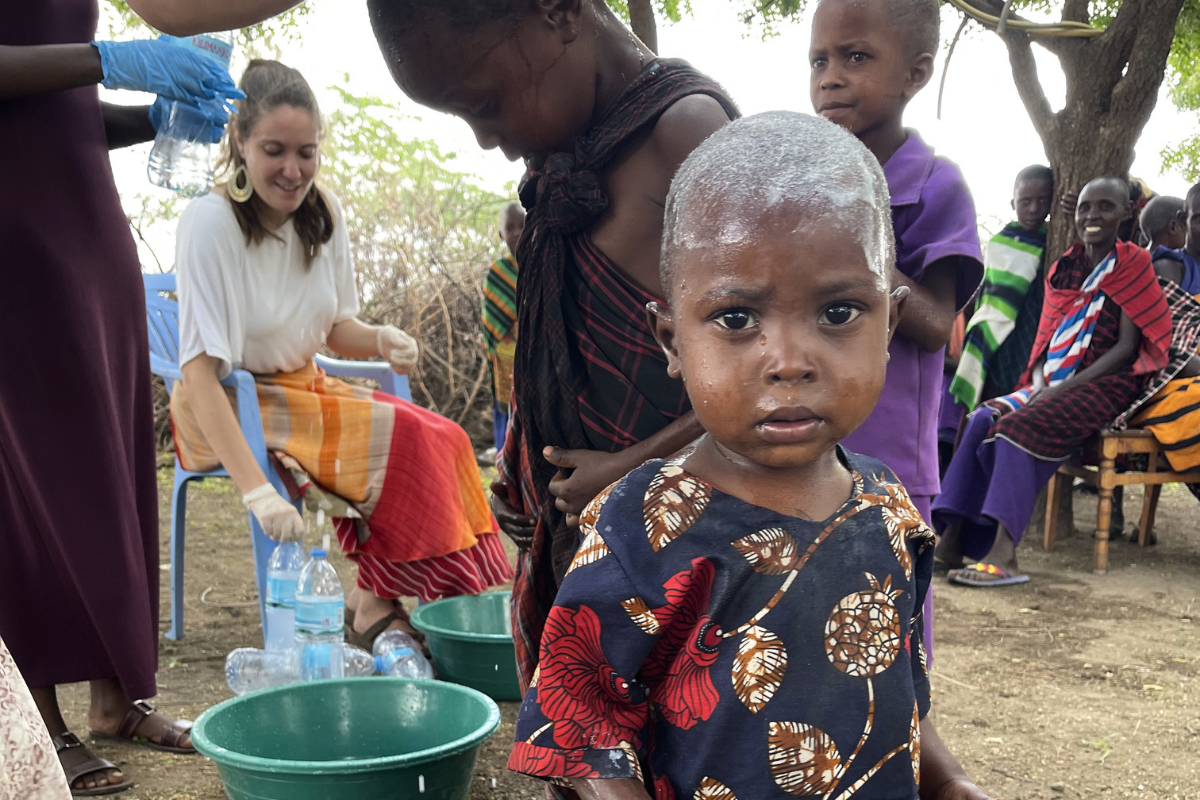
Introduce basic information on the importance of and protocol for individual and community sanitation to decrease and control scabies outbreaks.
Increase the number of hand washing stations and their use.
Impact
This program provides approximately 2,000 people with access to clean water and bathroom facilities, in a community with no existing facilities.
Funding
In 2022, Lalafofofo-Amka Sasa (LFAS) received a $3,000 grant for a long-term, multi-step WASH (Water, Sanitation & Hygiene) Education Photovoice Program from the Palo Alto Rotary Club.
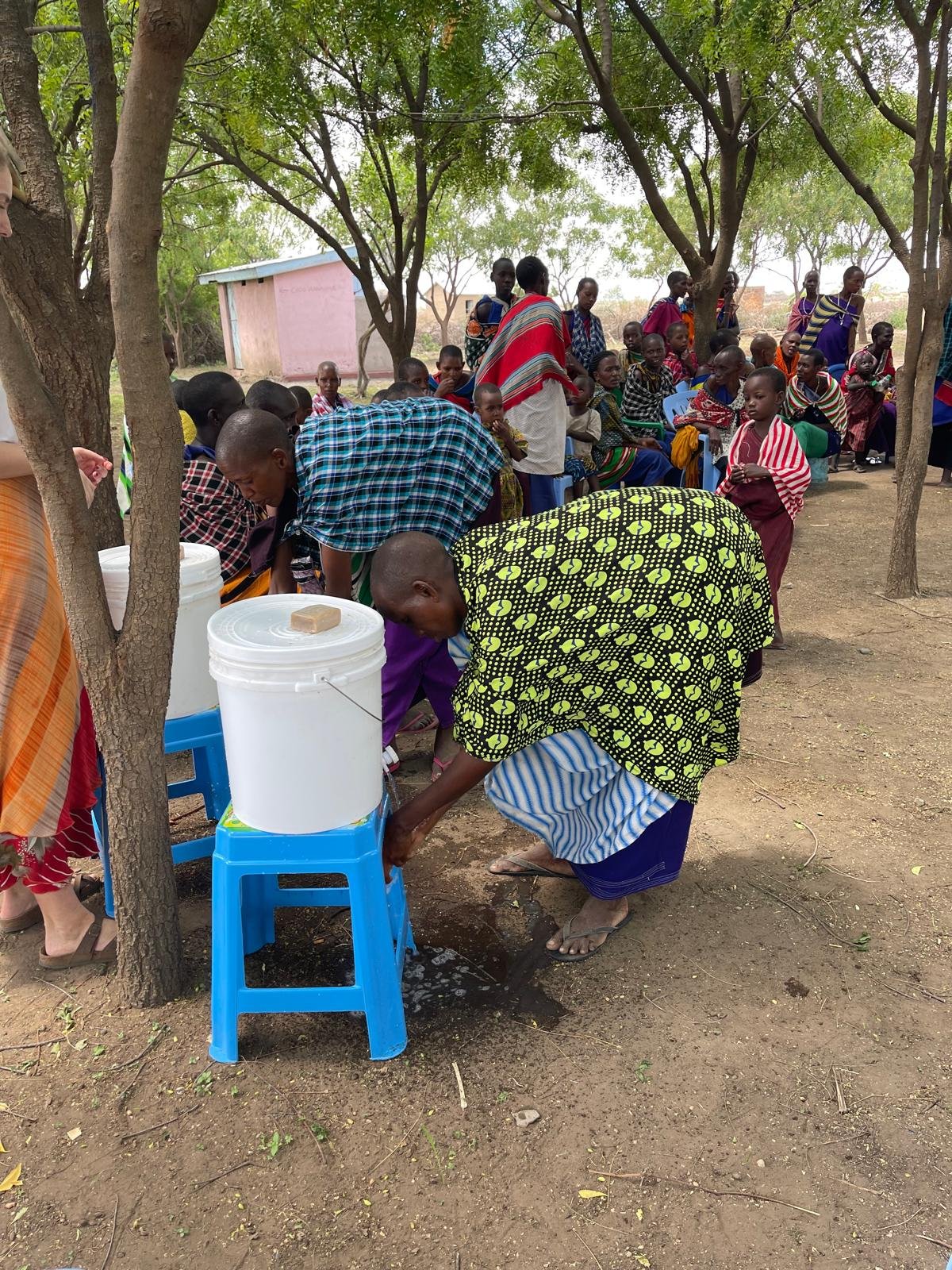
Women using a basic hand washing station with clean water, soap and towels.
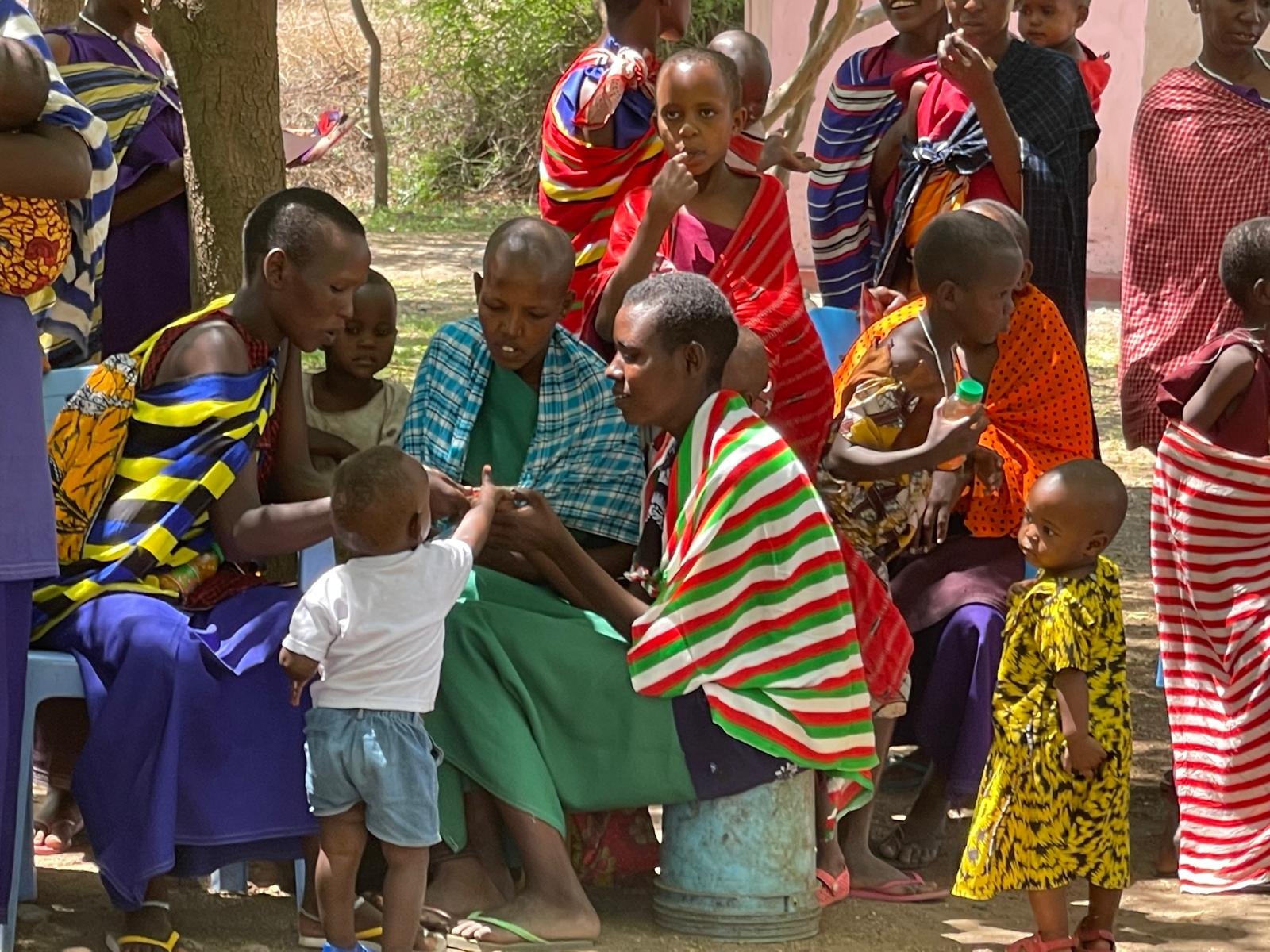
Community members gathering for WASH workshop.
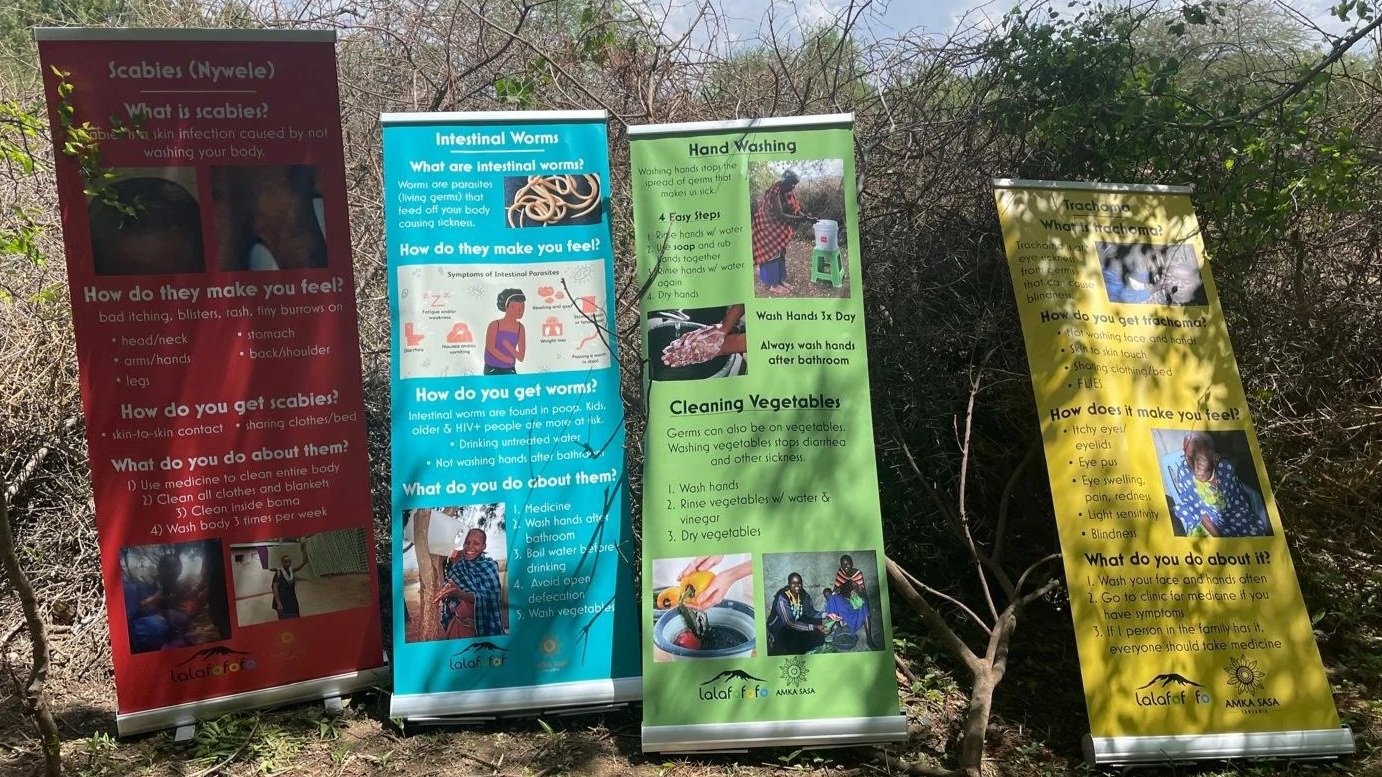
WASH educational materials used to teach hygiene and disease prevention.
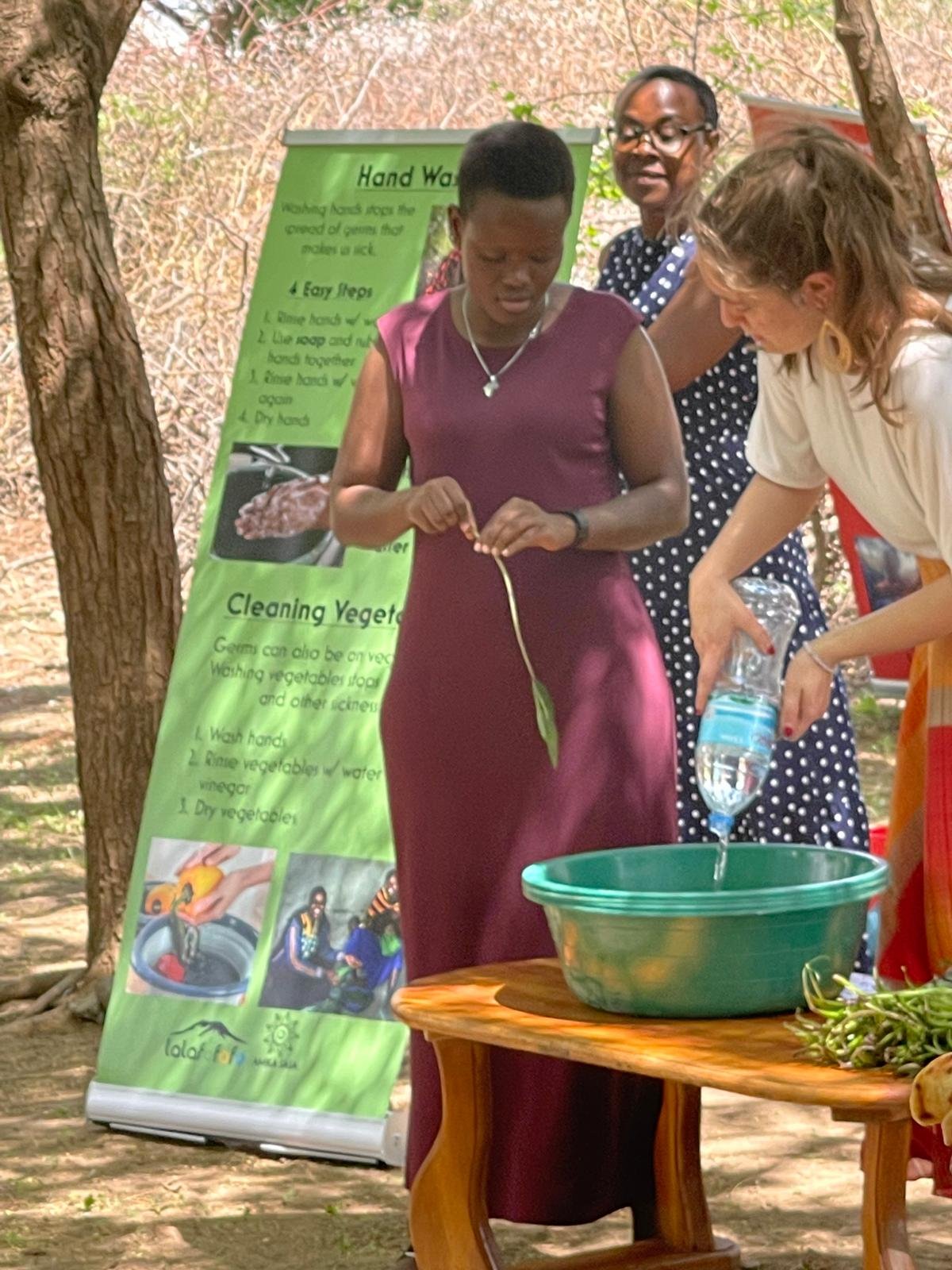
Community-Led Health Workshops
Trained WASH Ambassadors lead interactive demonstrations that teach mothers and families proper handwashing and sanitation protocols to help control and prevent disease outbreaks.